
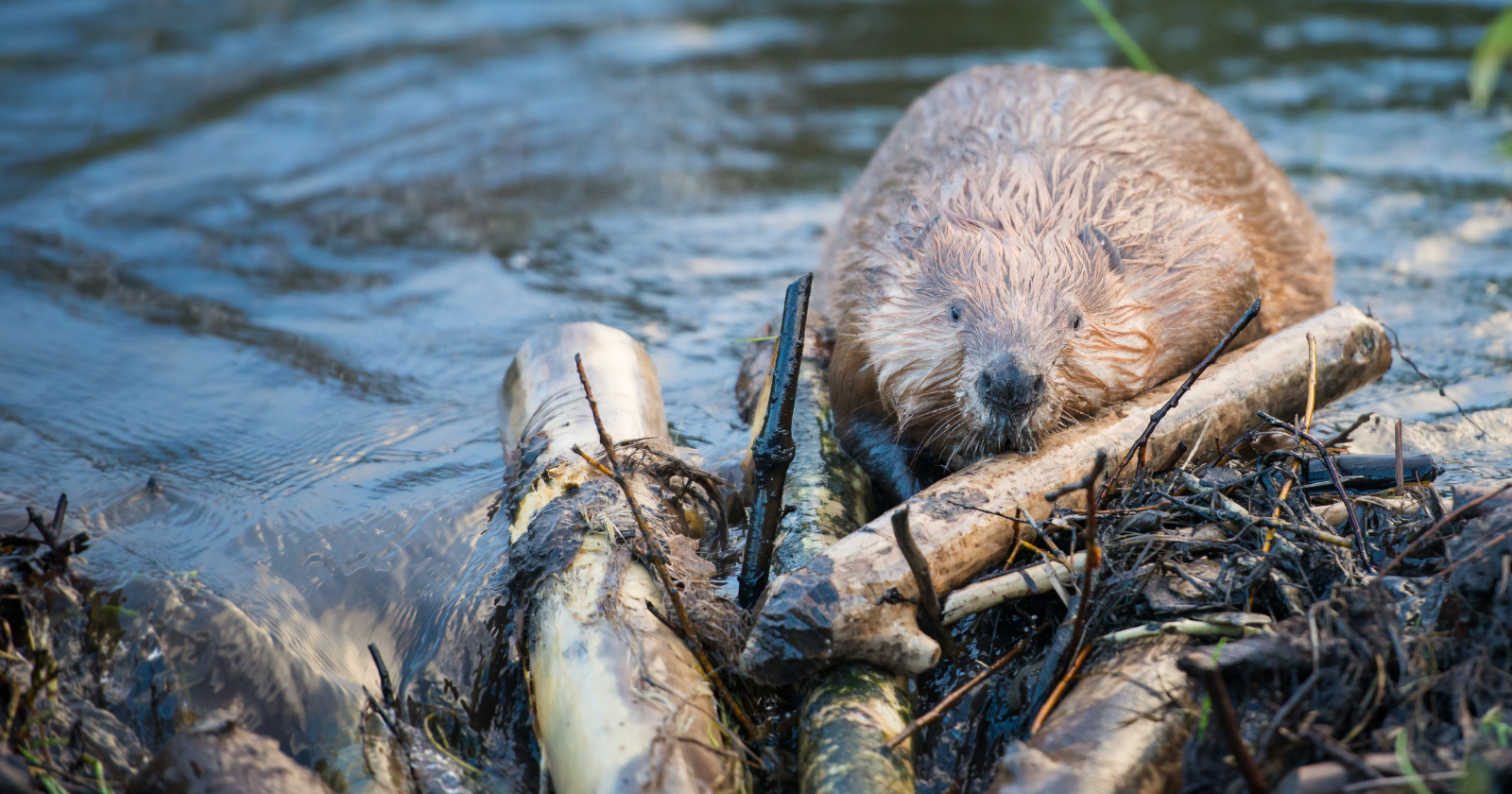
In March 2025 the National Trust released two pairs of beavers into the wild at Little Sea, a freshwater lake of roughly 33 hectares behind the dunes at Studland in Dorset, under a licence from Natural England. About a year on, one of those pairs has built a dam around 35 metres long, roughly 115 feet, converting a shady woodland stream into a pond and open wetland. Trail cameras at the new water have recorded an otter fishing and a barn owl hunting along the edge, according to BBC News and a National Trust media update published in late March 2026.
That is the headline, and it is worth stating plainly before the complications, because the complications are real and the Trust has not hidden them.
The beavers who were already there
The licensed release did not arrive at an empty site. An unlicensed pair was already living at Little Sea, found in 2024 according to the BBC, origin unexplained. Beavers are territorial. A resident pair with an established territory does not politely make room for newcomers dropped into the same waterbody, and the year that followed reads as a fairly direct demonstration of that.
The unlicensed animals did well. The National Trust reports that pair raised three kits and built two large lodges, which is roughly what a settled beaver family does when it has water, willow, and time.
The licensed arrivals had a harder start. They appear to have been pushed out. One female swam around five kilometres, out past Old Harry Rocks and along the coast to Swanage, where she turned up in a stream near public toilets. She was recaptured and returned. A pair later spent time at the Studland sewage treatment works, including its swimming pool, before moving on again. Read without context this sounds like farce. Read with context it is what dispersal looks like in a landscape where the good territory is taken and a young animal is searching for somewhere it will not be fought over.
Eventually one pair found that somewhere. The Trust and the BBC have both been careful about where. The settlement site is partly undisclosed, described as a secret location away from the original release point, within the Purbeck landscape. That reticence is a deliberate management decision rather than an oversight, and it is worth respecting rather than reverse-engineering.
What one 35-metre dam actually did
The engineering result is the part that will travel, and it deserves to be described precisely rather than dressed up.
Before, there was a brook running through woodland under a closed canopy. Shade, a narrow channel, limited light reaching the water. After roughly a year of beaver activity, there is a dam around 35 metres long, a deep pond behind it, felled and thinned trees, and a canopy opened up to the sky. That is the standard beaver sequence: dam, impound, flood, coppice, and the light follows.
What the light and water bring is the part the cameras have started to document. Otter has been recorded fishing in the new pond. Barn owl has been recorded hunting at the water’s edge. Trust volunteers have also logged birds including redpoll and water rail. None of those species were conjured out of nothing; they were presumably in the wider landscape already. What changed is that a small piece of Purbeck now offers habitat structure it did not offer in early 2025, and animals are using it.
Gen Crisford, the Trust’s Wetlands Project Officer, is quoted in both the BBC piece and the Trust update on the ecosystem effects and on the ongoing monitoring, and the Trust notes that mating was captured on camera in early 2026. That is grounds for hope about kits rather than confirmation of them, and it should be held loosely until the Trust says otherwise.
The broader framing the Trust offers is nature-based solutions and the 30 percent by 2030 land target, with Ben McCarthy, its Head of Nature Conservation, making that case in the press update. Beavers were hunted to extinction on mainland Britain in the sixteenth century, which means every one of these projects is a re-learning exercise for the landscape and the licensing system at the same time.
What a year like this can and cannot prove
Alongside the dam, one licensed male died after attempting a sea swim during a very hot, dry summer when water levels dropped, as reported by the BBC. His mate was not subsequently seen. Crisford’s reported view, that a death like this is sad but not unusual in reintroductions, is honest and also a reminder that mortality is part of the arithmetic rather than an aberration in it.
So the useful reading of year one is narrow and firm. A licensed release of four animals produced one settled pair, one substantial dam, one new wetland, and camera evidence of otter and barn owl using it. It also produced territorial displacement by animals nobody licensed, a five-kilometre coastal swim, a recapture, a return, a sewage works detour, one death, and a settlement site the Trust will not name.
The Trust has signalled a further wild release in the Purbeck Heaths National Nature Reserve, expected in autumn, location to be confirmed. Whatever that adds, the record from Studland stands as it is. One pair turned a shaded brook into open water in twelve months, and otter and barn owl came to it. That is real. It is not the whole story of the year, and pretending otherwise would flatten the more interesting thing these animals have actually shown, which is how hard it can be to find a place to build.